
Premier League Shirt Ban Leaves Gambling Advertising Widespread, Bristol Study Finds
Gambling messages excluding sponsorship lead-ins fell 10.5% against a three-year average, while branding on sleeves and training kits increased sharply.

This website contains information about gambling and betting and is intended for adults only. You must be at least 18 (or the legal age in your country) to enter.
Gambling can be addictive. Please play responsibly.
Research covering five countries argues that regulatory maturity, tax predictability and competition increasingly determine opportunities, with contributors expecting dealmaking to recover in 2027.
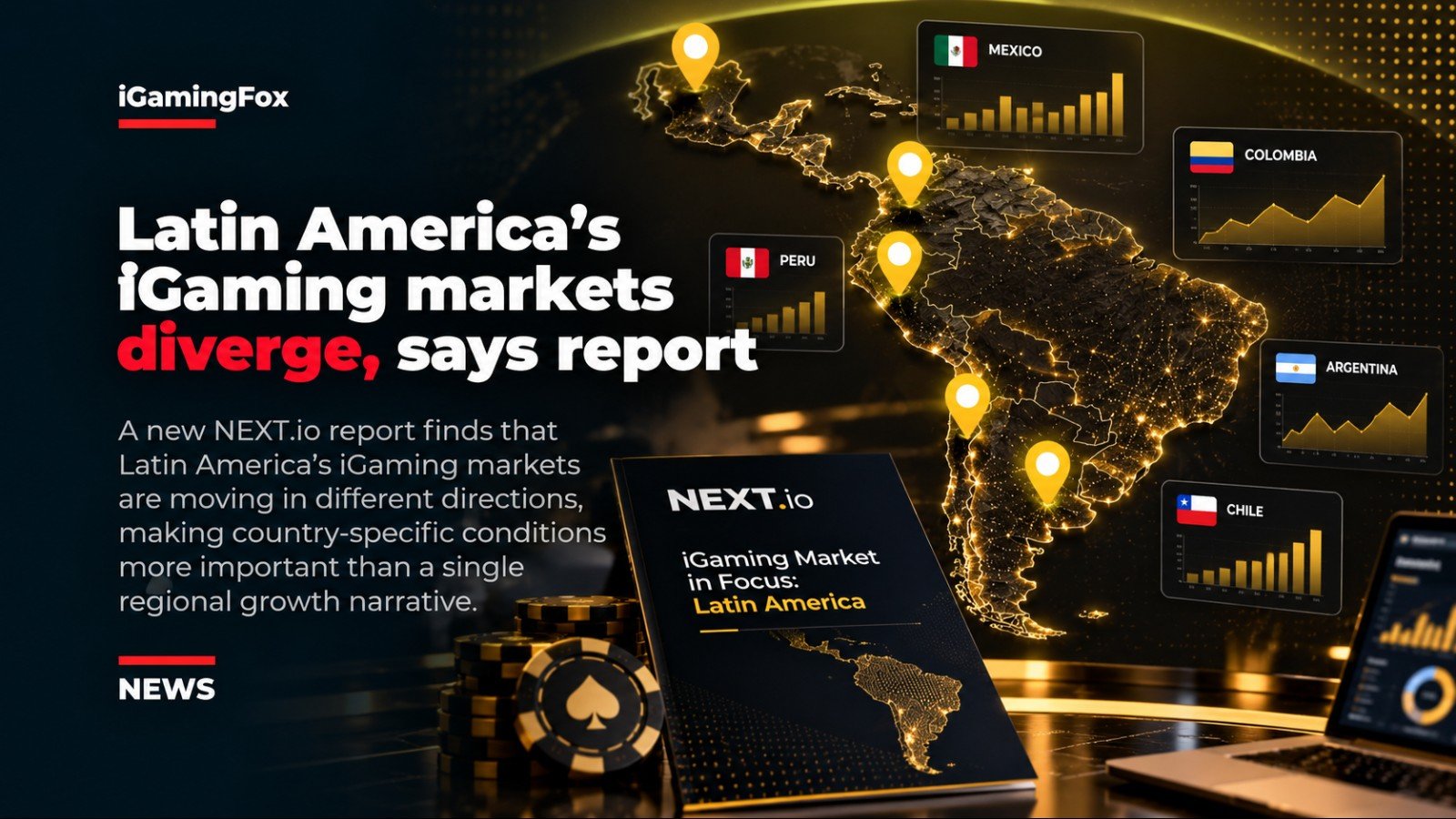
Latin America’s iGaming markets are moving in different directions, making country-specific conditions more important than a single regional growth narrative, according to new research from NEXT.io.
Published in partnership with sportsbook supplier DATA.BET, NEXT iGaming Market in Focus: Latin America examines Mexico, Argentina, Peru, Colombia and Chile. It draws on more than 20 interviews with operators, regulators, lawyers, advisers and investors.
The report describes 2026 as a year in which differences between those markets widened. Its argument concerns the fragmentation of the regional investment story, rather than a forecast that Latin American iGaming will collapse.
Colombia, which introduced online gambling regulation in 2016, is presented as the most mature of the five markets. Peru receives a positive assessment for the workability of its regulatory framework, although uncertainty over taxation remains a concern.
Mexico offers scale but also established competitors and a gambling law dating back to 1947. Argentina’s provincial licensing structure creates a fragmented operating environment, while Chile has yet to establish a regulated online market.
NEXT.io’s comparison assesses each country through market potential, regulation, operating conditions and player profiles. The resulting opportunities differ according to whether a business is an international operator, challenger brand, content supplier or payments provider.
The report identifies tax predictability as a significant consideration when assessing market entry.
Mexico illustrates the gap between statutory rates and the burden businesses may face in practice. Although its headline excise rate is 50%, experts interviewed for the research estimated an effective rate of roughly 12% to 15% under recognised cost structures.
Those estimates should be read as the contributors’ assessment of operating arrangements, rather than a uniform tax rate applicable to every operator.
H2 Gambling Capital figures cited in the report put Argentina’s regulated GGR at approximately $1.1 billion, compared with around $1.2 billion offshore.
Separately, advisers interviewed for the research estimated that unlicensed activity could account for as much as 80% of the market. The figures represent different estimates and should not be treated as a single consistent measurement.
For Chile, contributors anticipate a framework taking shape in late 2027 or 2028. The report presents potential entry opportunities as dependent on the rules ultimately adopted.
The research suggests political and regulatory uncertainty has delayed acquisitions and investment decisions. Contributors expect activity to recover in 2027 as outstanding questions become clearer.
The report also identifies opportunities in payments and affiliate services, alongside gaps between product offerings and local player demand. Its broader conclusion is that operators and suppliers need to assess each jurisdiction individually, including whether licences are available and whether expansion requires building a business or acquiring an existing one.
Gambling messages excluding sponsorship lead-ins fell 10.5% against a three-year average, while branding on sleeves and training kits increased sharply.
Research covering five countries argues that regulatory maturity, tax predictability and competition increasingly determine opportunities, with contributors expecting dealmaking to recover in 2027.
The Malta-incorporated public benefit foundation will initially support existing projects, with sport remaining a central focus and no funding commitment disclosed.

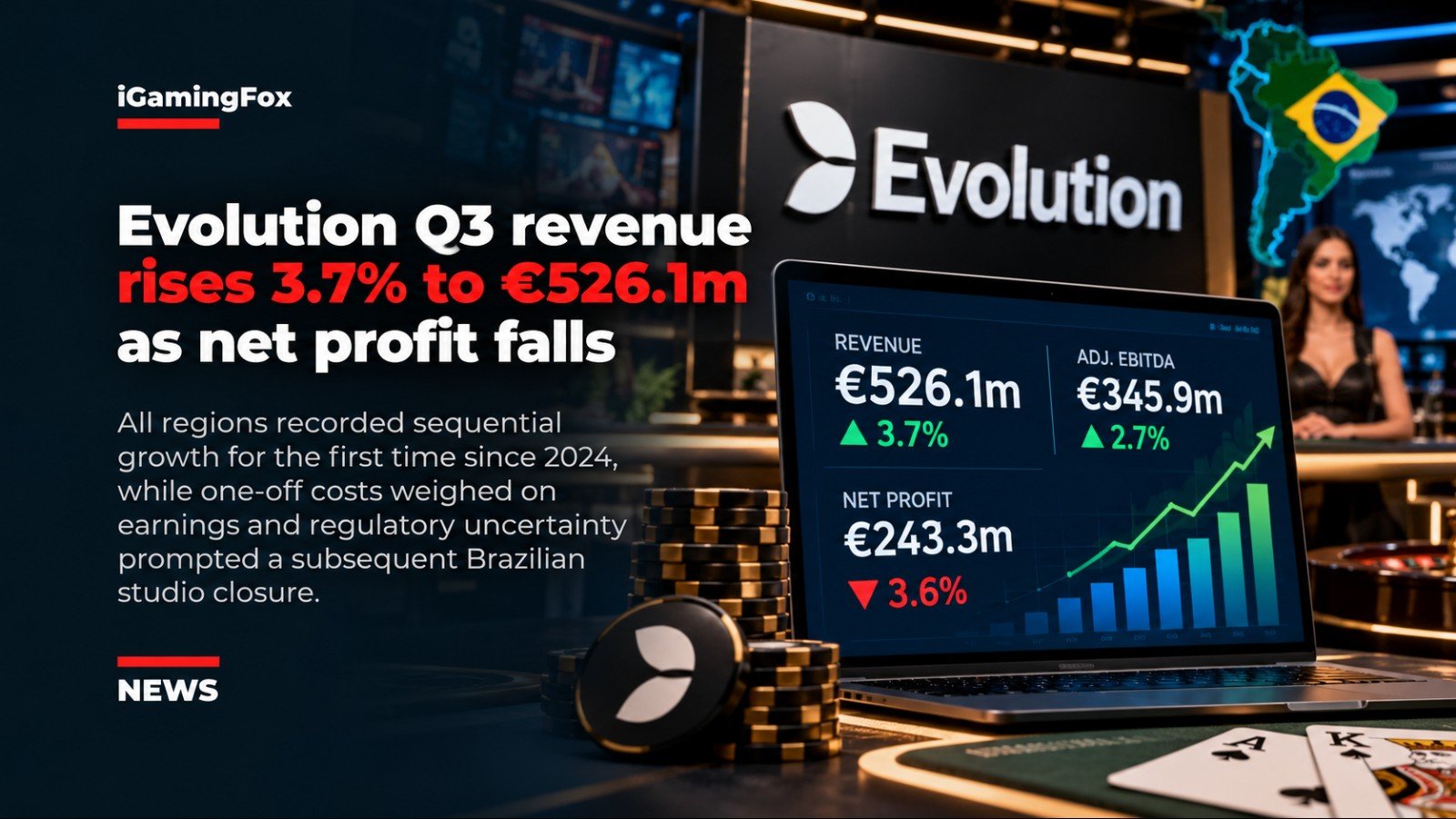
All regions recorded sequential growth for the first time since 2024, while one-off costs weighed on earnings and regulatory uncertainty prompted a subsequent Brazilian studio closure.

Breaking iGaming news, bonuses and event alerts — straight to your phone.
Join the channel
Comments (0)
No comments yet. Be the first!